





|
Kingdom: Animalia Phylum: Chordata Class: Aves (Birds) Order: Anseriformes Family: Anatidae |
|
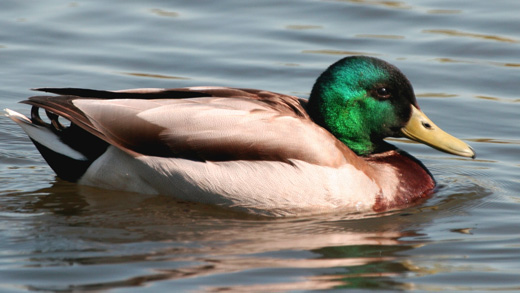
Mallard (Anas platyrhynchos) is a scarce winter visitor to north and central India. Some of the birds breed in north Kashmir. This largest of the freshwater dabbling duck is found in the wetlands. Derived from the Old French word "mallart" for "male," their common name refers to the striking and recognizable plumage of the male. The species name, platyrhynchos, means "flat-billed," referring to the long, broad and level bill. Springing into flight from the water's surface, Mallards do not require a running take-off. Their strong flight is characterized by slow and broad wingbeats. Size: 60 cm Wingspan: 36 inches Local name: Nir Rugi. Identification: The Mallard (male) is probably one of the most obvious and easily recognizable ducks. Male has gray back, yellow bill, green head with a white ring around its neck. Chestnut breast, gray flanks, upper-wing coverts and black under-tail coverts contrasting with white tail. Female mallard has orange bill with black central patch, pale brown face, dark cap & eye line, mottled brown and tan plumage. Females, juveniles and eclipse (non-breeding) males are less conspicuous and strongly resemble one another. Mottled brown overall, all display a chocolate brown stripe running from the crown to the base of the nape and a dark eyeline. In all plumages, the iridescent-blue speculum (the brilliant swatch of color on the leading edges of the wings) is bordered by two, white wing bars. Calls: The Mallard female produces familiar, loud quacking noises and reedy-sounding "laughs". When flushed, the female gives a single, loud and harried "quack." The voice of the male is a short, rasping "quenp." Courting males whistle weak "piu" notes. When in flight, the wings may make faint, whistling noises. Nests: Mallards usually select nest sites near water. The female builds the nest in wallowed out ground depressions (scrapes) on drier portions of their habitat. Concealed by high vegetation, logs or dead wood, the nest is constructed of grasses, reeds, and cat-tails. Lined with down as the clutch is laid, the soft nest is safe haven for the 6-15, 58 mm eggs. Unmarked, the eggs vary in color from greenish-buff to grayish-buff to whitish. The female alone incubates the clutch for 26-30 days. The male deserts the nest after the first week of incubation to join male flocks. Young birds fledge 42-60 days after hatching and are reared by the female.
Food: Mallards forage both on land and in freshwater. They primarily
consume seeds and greens (shoots of sedges and grasses), grains, acorns, aquatic
invertebrates and insects. When on land, these ducks forage by gleaning seeds,
grains and insects from the ground and vegetation as they walk along the forest
floor. By "dabbling," floating on the water's surface and abruptly pivoting
headfirst and downward into the water while raising their hindquarters above
water, they are able to reach submerged aquatic plants and animals on the muddy
bottom. |