






Kingdom: Animalia Phylum: Chordata Class: Aves (Birds) Order: Anseriformes Family: Anatidae Cygninae |
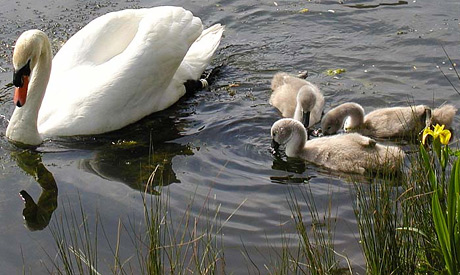 Mute Swan (Cygnus olor) is a vagrant in India. Size: 130-155 cm. Weight: 13 kg Identification: Large, long-necked waterbird with short legs and a short duck-like bill. Long neck held in distinctive "S" curve at rest. Black facial skin and fleshy knob on forehead. Orange bill with black base, and lores. Black legs and feet. Entirely white plumage. Fluffy back feathers. Eyes brown. Female has smaller bill knob. Sexes similar, but female is slightly smaller. Call: snorts, hisses and quiet whistles. Habitat: Large lakes and rivers. Distribution: British Isles, north central Europe, north central Asia, North Africa. Ponds, wetlands, streams, lakes and lagoons, in winter they may move to marine habitats. Habits: Annual molting takes place October-December, breeding birds later. Chicks can ride on their parents' backs, or under their wings. When swimming the bill is held pointing downward. Aggressive while protecting the nest, even domesticated swans are dangerous; their wings are powerful and can inflict serious injuries to much larger animals, including humans. Posturing is a common form of communication, as their 'voices' are weak. Food: Diet: Mainly vegetation leaves and stems of aquatic plants, as well as frogs, worms and fish occasionally. Breeding: Nest: large, as far as they can be from other nests and above water level, lined with down. Strongly territorial, pairs defend feeding and nesting areas. Eggs: 4 - 11 pale green-white. Chick: Light grey down. Grey-blue bill, legs and feet. Some cygnets are all white and do not develop the intermediate grey-brown stage of the juvenile before adulthood. They are led to water within a day of hatching. Broods: single, incubation 5 weeks by female, but both guard the chicks. Fledge: 5 months (but 60 days is average in its natural range). Mute swans are usually 3 or 4 years old before they breed. Swans do not mate for life, despite common belief, and have an elaborate courtship display. The pairs are generally monogamous for at least a season. Life span: About 20 years in the wild. Predators: The adult has few predators, unless old or ill. Eggs and young are preyed on by raccoons, mink and other similar sized predators. Nomenclature: Male = Cob; Female = Pen; Young = Cygnet; Group of swans = herd.
|