






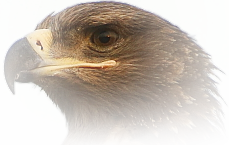
| Kingdom: Animalia Phylum: Chordata Class: Aves (Birds) Order: Ciconiiformes Family: Ardeidae |
|
Birds of the Ardeidae family originated in the Eocene era about 60–38 million years ago. Present-day herons have been lumped together taxonomically since Linnaeus’s day. As part of the order Ciconiiformes, they are related most closely to storks, ibises, and spoonbills. The Ardeidae encompass the typical herons, egrets, night herons and the bitterns. The bitterns (subfamily Botaurinae), appear to be the most divergent among the primitive heron stock, a complete turnaround of systematic thinking of a few decades ago. The subfamily Ardeinae include the herons (tribe Ardeini), the egrets (tribe Egrettini) and the night herons (tribe Nycticoracini). Herons are tall, thin birds, with long necks and legs, large pointed bills, large moveable eyes, and broad wings. The plumage is generally complex, with black, white, grays, or browns, and they have distinctive plumes. These features are primarily adaptations for wading in water in order to feed on fish and other aquatic prey and for communicating with other birds. The long neck has 20-21 cervical vertebrae, the fifth through seventh having the articulation that gives the neck its characteristic kink. The neck is long enough to be folded over the back in an “S” shape when in prolonged flight, making a flying heron easily recognizable. The long legs have feathers on the thighs but are otherwise featherless. The toes are long (including the back toe, which is on level with the rest) and slightly webbed. The claw of middle toe has a serrated edge, which facilitates care of the plumage. The heron bill is one of its defining characteristics. Most are elongated to effect the capture of quickly moving prey in a tweezer-like fashion following a rapid strike. Thin rapier-like bills are adaptations for fish eating, piercing through the water to capture fleeing prey. Bill color depends on species, and can vary with age and season. In some species bill color brightens and becomes more colorful during courtship.
tribe: Ardeini (typical Herons)
Grey Heron (Ardea cinerea) - widespread winter visitor & resident
Cattle Egret (Bubulcus ibis) - widespread resident tribe: Nycticoracini (Night-Herons)
Malayan Night Heron (Gorsachius melanolophus) - widespread resident subfamily:Botaurinae (Bitterns)
Great Bittern (Botaurus stellaris) - widespread winter visitor |
| |
| Birds | Bird Diagram | Ornithology | Indian Sites | Bird Watching | Migration | North India | Birds of India | Haryana |
All rights reserved. Copyright © 2005-2013 Birds and birding in India. Disclaimer
website: Free Java Guide & Tutorials