





| Kingdom: Animalia Phylum: Chordata Class: Aves (Birds) Order: Passeriformes Family: Bombycillidae |
|
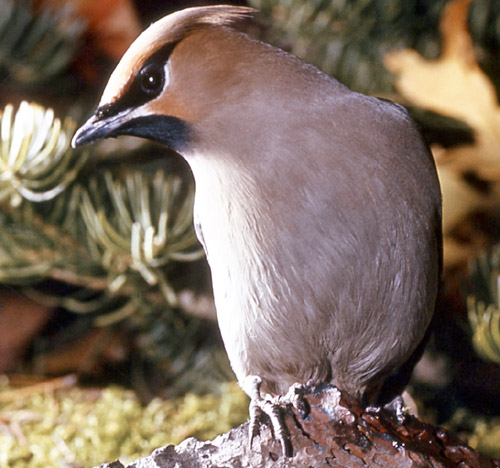
Bohemian Waxwing (Bombycilla garrulus) is a vagrant bird in India. Size: 18 cm. Although the Bohemian Waxwing occurs in the northern part of Czechoslovakia (Bohemia), it is actually so named for its wandering nature. In tame and gregarious flocks, Bohemian Waxwings inhabit open, coniferous-deciduous forests. As is typical for a waxwing, this species feeds heavily on fruit during all times of the year, though insects compose the bulk of the diet during warm months. Identification: These birds are medium-sized, with small heads, round bodies, short tails and black bills and feet. Adults of both sexes are similar, displaying vibrant black, white, yellow and red wing-markings. A lustrous, solid-gray overall, the face, nape and undertail coverts of adults are distinctly cinnamon colored while the throat is black. In flight, the white wing-patch at the base of the primary feathers is conspicuous. Juvenile birds are browner above and streaked on the breast and flanks. Calls: The rattling song of the Bohemian Waxwing is an irregular series of slow, low-pitched "scree" notes, similar to that of the Cedar Waxwing. The constant, clamorous calling of the flock is a high and thin, "sreeee." A piercing "sceeeeeew" alarm call is given to warn the flock of aerial predators. The typical loud and social nature of these birds has earned them their specific Latin name, garrulus, which means "chattering!" Nests: Bohemian Waxwings build their bulky, cup-shaped nests in conifers at variable heights and positions. Constructed of grasses, twigs and mosses and lined with fine materials, the nest cushions the 4-6, 25 mm eggs of the clutch. Eggs are pale bluish-gray and marked with black, particularly at the larger ends. Little is known about the reproductive biology of this species. The female incubates five eggs for two weeks; the male feeds the female during this time. The chicks are fed by both parents and leave the nest after 15 to 17 days. Food: Bohemian Waxwings form large, non-territorial feeding flocks. Prone to gluttony, these birds are known to ravenously feast on berries, small fruits, flower petals, tree sap and insects gleaned from foliage. Young birds are reared on both insects and berries. Adults also hunt by pursuing flying insects from their perches (hawking). In winter, berries, fruit and tree sap compose the majority of their diet. |
| |